News

All Updates


Jan 6, 2026
Press Release

Chairmen Guthrie and Latta Announce Hearing on Legislation to Protect America’s Energy Infrastructure

WASHINGTON, D.C. – Today, Congressman Brett Guthrie (KY-02), Chairman of the House Committee on Energy and Commerce, and Congressman Bob Latta (OH-05), Chairman of the Subcommittee on Energy, announced a hearing titled Protecting America’s Energy Infrastructure in Today’s Cyber and Physical Threat Landscape.

“Safeguarding our nation’s energy infrastructure is vital to providing affordable and reliable power while protecting American communities,” said Chairmen Guthrie and Latta. “Right now, the energy infrastructure in the United States faces numerous cyber and physical threats from sophisticated nation-state actors as well as criminals or ideologically driven hackers. To confront these issues, our Committee will hold a legislative hearing to discuss solutions for our energy infrastructure that would help to strengthen collaboration between the government and the private sector, detect cybersecurity threats, and increase physical security.”

Subcommittee on Energy hearing titled Protecting America’s Energy Infrastructure in Today’s Cyber and Physical Threat Landscape.

WHAT: Subcommittee on Energy hearing to discuss legislation that will focus on strengthening our nation’s energy infrastructure from cyber and physical threats.

DATE: Tuesday, January 13, 2026

TIME: 10:15 AM ET

LOCATION: 2123 Rayburn House Office Building

This hearing will focus on the following bills:

  • H.R.____, Energy Threat Analysis Center Act of 2026
  • H.R.____, Energy Emergency Leadership Act
  • H.R.____, Rural and Municipal Utility Cybersecurity Act
  • H.R. ____, Securing Community Upgrades for a Resilient Grid (SECURE Grid) Act
  • H.R.____, Pipeline Cybersecurity Preparedness Act

This notice is at the direction of the Chairman. The hearing will be open to the public and press and will be livestreamed online at energycommerce.house.gov. If you have any questions concerning this hearing, please contact Calvin Huggins at Calvin.Huggins1@mail.house.gov. If you have any press-related questions, please contact Ben Mullany at Ben.Mullany@mail.house.gov.


Chairmen Guthrie and Bilirakis Announce Legislative Hearing on American Automotive Safety, Affordability, and Leadership

WASHINGTON, D.C. – Today, Congressman Brett Guthrie (KY-02), Chairman of the House Committee on Energy and Commerce, and Congressman Gus Bilirakis (FL-12), Chairman of the Subcommittee on Commerce, Manufacturing, and Trade, announced a hearing titled Examining Legislative Options to Strengthen Motor Vehicle Safety, Ensure Consumer Choice and Affordability, and Cement U.S. Automotive Leadership.

“Since the Model T was first produced in 1908, the American automotive industry has been the driving force for creating jobs and improving the comfort and quality of the vehicles on our roads. Though the times and technologies have changed, our desire for innovation, safety, and consumer choice have not,” said Chairmen Guthrie and Bilirakis. “We look forward to discussing these bills to strengthen motor vehicle safety with our colleagues and continuing to advance American automotive leadership.”

Subcommittee on Commerce, Manufacturing, and Trade hearing titled Examining Legislative Options to Strengthen Motor Vehicle Safety, Ensure Consumer Choice and Affordability, and Cement U.S. Automotive Leadership.

WHAT: Subcommittee on Commerce, Manufacturing, and Trade hearing to examine ways to strengthen automotive safety, affordability, and leadership.

DATE: Tuesday, January 13, 2026

TIME: 2:00 PM ET

LOCATION: 2175 Rayburn House Office Building

The hearing will focus on the following bills:

  • H.R. ____, Motor Vehicle Modernization Act (Chairman Guthrie)
  • H.R. ____, Safety Is Not for Sale Act of 2026 (Ranking Member Pallone)
  • H.R. ____, Safely Ensuring Lives Future Deployment and Research In Vehicle Evolution (SELF DRIVE) Act of 2026 (Reps. Latta and Dingell)
  • H.R. 1566, Right to Equitable and Professional Auto Industry Repair (REPAIR) Act (Reps. Dunn and Perez)
  • H.R. 4376, AV Safety Data Act (Rep. Mullin)
  • H.R. 3360, Driver Technology and Pedestrian Safety Act (Rep. Mullin)
  • H.R. 6687, DRIVER Act (Rep. Harshbarger)
  • H.R. 6688, ADAS Functionality and Integrity Act (Reps. Harshbarger, Obernolte, Vazquez, and Torres)
  • H.R. 6850, DRIVE to HALT Drunk Driving Act (Rep. Dingell)
  • H.R. 1137, No Kill Switches in Cars Act (Rep. Perry)
  • H.R. 3385, To direct the Secretary of Transportation to issue certain regulations to update the definition of motorcycle, and for other purposes. (Rep. Van Orden)
  • H.R. 5221, PART Act (Reps. Baird and McCollum)
  • H.R. 2110, Safe Vehicle Access for Survivors Act (Reps. Dingell and Crenshaw)
  • H.R. ____, Know Before You Drive Act (Rep. Schrier)
  • H.R. ____, Securing Accessible Functional Emergency (SAFE) Exit Act (Rep. Kelly-IL)
  • H.R. ____, Safe Streets for Everyone Act of 2026 (Rep. Clarke)

This notice is at the direction of the Chairman. The hearing will be open to the public and press and will be livestreamed online at energycommerce.house.gov. If you have any questions concerning this hearing, please contact Alex Khlopin at Alex.Khlopin@mail.house.gov. If you have any press-related questions, please contact Daniel Kelly at Daniel.Kelly@mail.house.gov.


Jan 5, 2026
Press Release

Energy and Commerce Weekly Look Ahead: The Week of January 5th, 2026

WASHINGTON, D.C. – This week, the House Committee on Energy and Commerce is holding two Subcommittee Hearings. Read more below.

SUBCOMMITTEE HEARING: The Energy and Commerce Subcommittee on Energy is holding a hearing to discuss the licensing, deployment, and implementation of recently enacted federal laws and administration policies in nuclear energy.

  • DATE: Wednesday, January 7, 2026
  • TIME: 10:15 AM ET
  • LOCATION: 2123 Rayburn House Office Building

SUBCOMMITTEE HEARING: The Energy and Commerce Subcommittee on Health is holding a hearing to discuss legislation focused on improving Medicare payment policies and expanding access to care for seniors.

  • DATE: Thursday, January 8, 2026
  • TIME: 10:15 AM ET
  • LOCATION: 2123 Rayburn House Office Building


Jan 2, 2026
Press Release

ICYMI: Congressman Pfluger Op-Ed: Refill the Strategic Petroleum Reserve Now, Before It’s Too Late

WASHINGTON, D.C. – In case you missed it, the Dallas Morning News recently featured an op-ed by Congressman August Pfluger (TX-11), a Member of the House Committee on Energy and Commerce, which highlighted the need to refill our Strategic Petroleum Reserve in order to strengthen our national security and unleash American energy dominance.

In Case You Missed It:

“Following the 1970s oil crisis, Congress created the Strategic Petroleum Reserve (SPR) as America’s insurance policy against global energy supply disruptions. For nearly half a century, this emergency crude oil stockpile has served as an indispensable safeguard — ready to cushion the blow from unexpected market shocks, natural disasters or geopolitical conflicts.

“Today, however, this vital insurance policy is running on fumes. At just 409 million barrels, the SPR is at its lowest level since its inception, with less than 60% of its capacity currently being utilized.

“This depletion stems largely from the Biden administration’s unprecedented drawdown of more than 290 million barrels in 2022 in an attempt to ease high gas prices following Russia’s invasion of Ukraine. While the move temporarily worked, it was the largest drawdown in the reserve’s history and came with no viable plan to replace what was taken.

“Three years later, the SPR remains dangerously depleted, and now the structural integrity of the salt caverns that protect the remaining barrels is at serious risk. Fortunately, there is a clear solution, and Washington must act on it.

“Oil prices have hovered near multiyear lows, offering a prime opportunity to replenish the reserve at a discount. This year alone, West Texas Intermediate (WTI) crude has dipped as low as $57 per barrel and has averaged around $65 per barrel — prices well below the $75-$80 assumptions often used in federal budget models. At today’s low prices, refilling the roughly 321 million barrel gap would cost less than $21 billion — a bargain by any measure for this scale of investment.

“We should not repeat the mistakes of the previous administration that failed to capitalize on similar opportunities, making only token purchases even when prices fell below the $70 per barrel target. At that pace, restoring the SPR to its pre-2020 level of roughly 635 million barrels would take nearly a decade, which is more than quadruple the amount of time it took former President Joe Biden to drain it.

“President Donald Trump and Congressional Republicans have taken a modest first step. In the Working Families Tax Cut (WFTC) law, we secured $850 million to refill the SPR: $171 million for crude purchases, $218 million for critical cavern repairs and $461 million to cancel the upcoming mandated sale of 7 million barrels. Using the $75-$80 per barrel assumption, the Department of Energy estimates it can purchase roughly 2 million barrels with these funds and has already awarded the first contracts to do so.

“While this is a start, it is nowhere near enough to fill the 700 million barrel capacity the SPR was built to hold. If we are serious about reestablishing American energy dominance, then refilling the rest must be a top priority for Republicans in 2026.

“The biggest obstacle to doing so isn’t a lack of supply — it’s the drawn-out process of congressional appropriations, and the little motivation from lawmakers to fix it.

“The United States currently produces over 13 million barrels of oil per day, nearly half coming from the Permian Basin. Producers are ready and able to deliver the barrels needed if the government is prepared to buy, but current law requires the DoE to wait for Congress to allocate funds before purchasing crude. This procedural molasses has repeatedly prevented timely purchases under favorable market conditions, forcing us to sit on our hands even when the opportunity to act is unmistakable.

“While a comprehensive overhaul of the congressional appropriations process is necessary to solve this issue once and for all, Congress can still make significant progress in upcoming annual funding measures and in next year’s budget reconciliation process.

“With geopolitical tensions rising and Chevron CEO Mike Wirth recently predicting that oil prices could remain near record lows through 2026, the United States is in a narrow, strategic window to act. Congress must build on the momentum from the WFTC and prioritize appropriating the necessary funds to fully replenish the SPR now — not after the next global disruption drives prices up or exposes a crippling vulnerability.

“We may never see another ripe opportunity like this again, and we cannot afford to miss it. The bottom line is that the SPR is the cornerstone of American energy security and treating it as the proactive national security asset it was created to be is long overdue.

“The SPR was never meant to be weaponized as a tool for political gain and refilling it now should not be reduced to a partisan fight.

“The next crisis will come. The only question is whether we will be prepared.”


Dec 31, 2025
Energy

Chairmen Guthrie and Latta Announce Hearing on Nuclear Energy

WASHINGTON, D.C. – Today, Congressman Brett Guthrie (KY-02), Chairman of the House Committee on Energy and Commerce, and Congressman Bob Latta (OH-05), Chairman of the Subcommittee on Energy, announced a hearing titled American Energy Dominance: Dawn of the New Nuclear Era.

“Nuclear energy provides affordable and reliable power to our grid while generating the largest portion of carbon free electricity in the United States,” said Chairmen Guthrie and Latta. “This hearing will offer a chance to discuss the current state of our nuclear industry, addressing the licensing and deployment of nuclear power while examining how the implementation of recent laws and policies can support the industry growth that will be vital to meeting our energy and security needs.”

Subcommittee on Energy hearing titled American Energy Dominance: Dawn of the New Nuclear Era

WHAT: Subcommittee on Energy hearing to discuss the licensing, deployment, and implementation of recently enacted federal laws and administration policies in nuclear energy.

DATE: Wednesday, January 7, 2026

TIME: 10:15 AM ET

LOCATION: 2123 Rayburn House Office Building

This notice is at the direction of the Chairman. The hearing will be open to the public and press and will be livestreamed online at energycommerce.house.gov. If you have any questions concerning this hearing, please contact Calvin Huggins at Calvin.Huggins1@mail.house.gov. If you have any press-related questions, please contact Ben Mullany at Ben.Mullany@mail.house.gov.


Dec 31, 2025
Press Release

Chairmen Guthrie and Griffith Announce Legislative Hearing on Improving Medicare Payment Policies for Seniors

WASHINGTON, D.C. – Today, Congressman Brett Guthrie (KY-02), Chairman of the House Committee on Energy and Commerce, and Congressman Morgan Griffith (VA-09), Chairman of the Subcommittee on Health, announced a hearing titled Legislative Proposals to Support Patient Access to Medicare Services.

Subcommittee on Health hearing titled Legislative Proposals to Support Patient Access to Medicare Services.

WHAT: Subcommittee on Health hearing to discuss legislation focused on improving Medicare payment policies and expanding access to care for seniors.

DATE: Thursday, January 8, 2026

TIME: 10:15 AM ET

LOCATION: 2123 Rayburn House Office Building

This hearing will focus on the following bills:

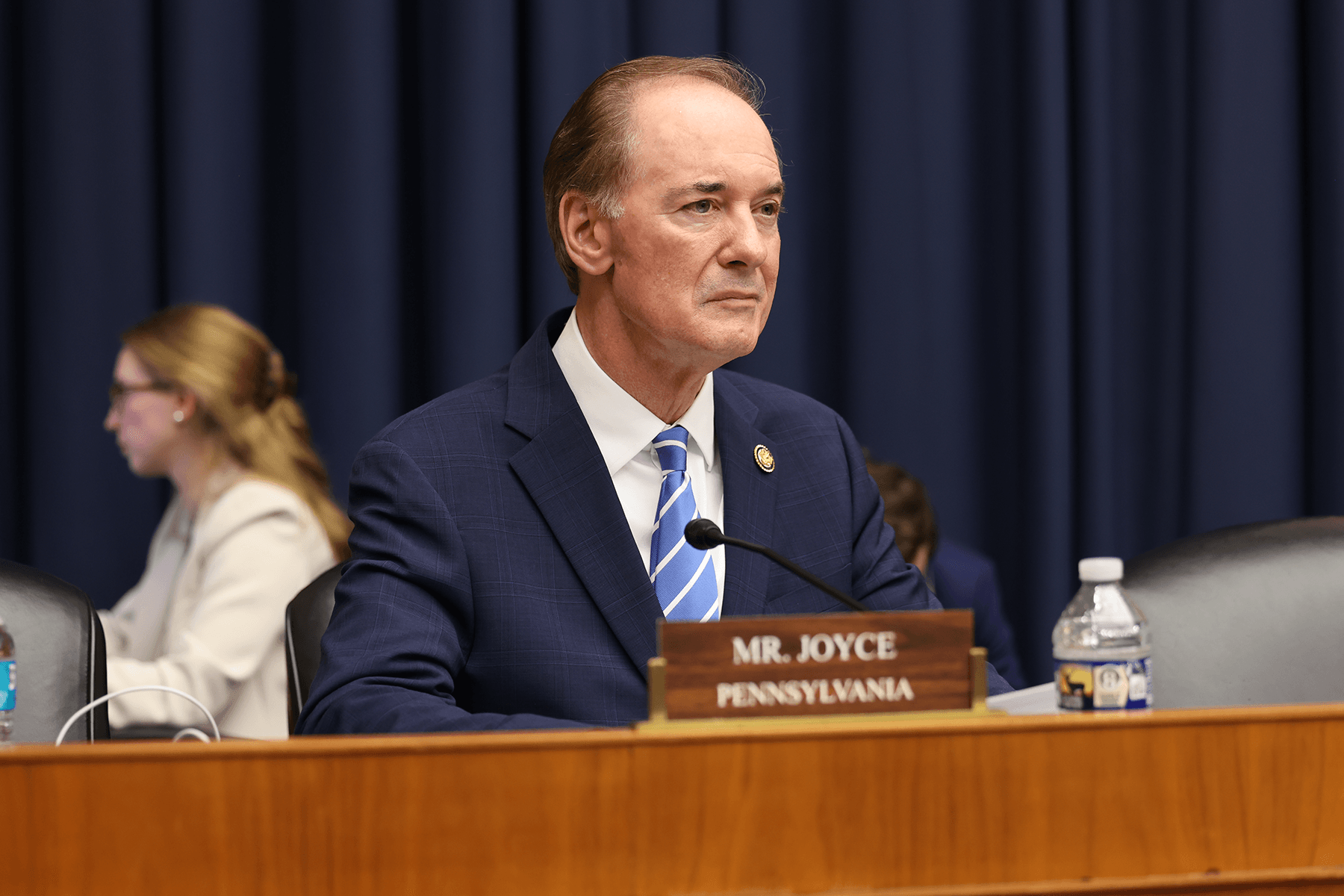
  • H.R. 1703, Choices for Increased Mobility Act of 2025 (Rep. Joyce – PA)
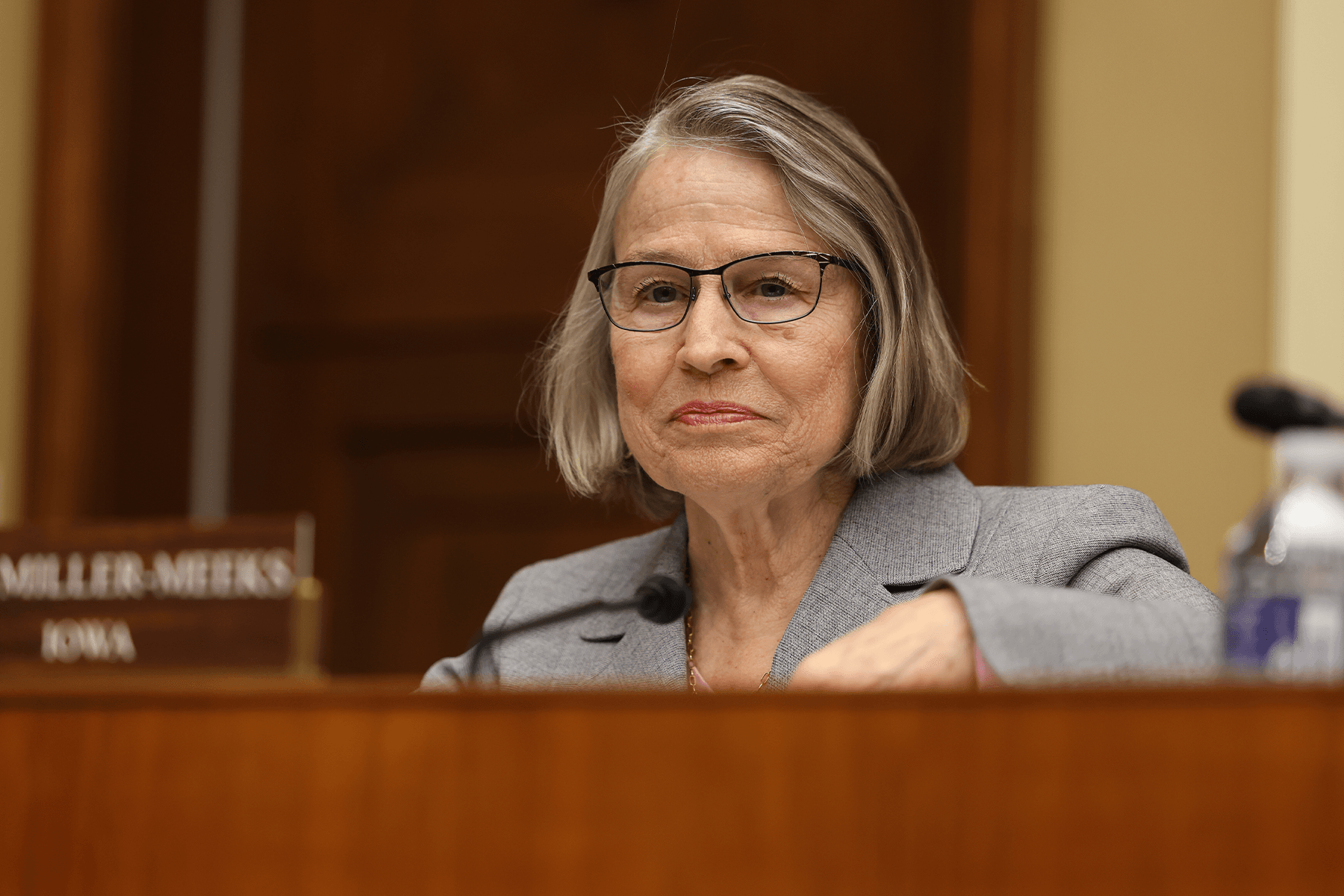
  • H.R. 2005, DMEPOS Relief Act of 2025 (Rep. Miller-Meeks)
  • H.R. 2172, Preserving Patient Access to Home Infusion Act (Rep. Buchanan)
  • H.R. 2477, Portable Ultrasound Reimbursement Equity Act of 2025 (Rep. Van Duyne)
  • H.R. 2902, Supplemental Oxygen Access Reform (SOAR) Act of 2025 (Rep. Valadao)
  • H.R. 5243, To amend title XVIII of the Social Security Act to increase data transparency for supplemental benefits under Medicare Advantage. (Rep. McClellan)
  • H.R. 5269, Reforming and Enhancing Sustainable Updates to Laboratory Testing Services (RESULTS) Act of 2025 (Rep. Hudson)
  • H.R. 5347, Health Care Efficiency Through Flexibility Act (Rep. Buchanan)
  • H.R. 6210, Senior Savings Protection Act (Rep. Matsui)
  • H.R. 6361, Ban AI Denials in Medicare Act (Rep. Landsman)

This notice is at the direction of the Chairman. This hearing will be open to the public and press and will be livestreamed at energycommerce.house.gov. If you have any questions about this hearing, please contact Annabelle Huffman at Annabelle.Huffman@mail.house.gov. If you have any press related questions, please contact Katie West at Katie.West@mail.house.gov.


Dec 29, 2025
Health

CMS Announces Billions of Dollars in Funding Allocations for Rural Health Transformation Program Grantees

WASHINGTON, D.C. – Today, Congressman Brett Guthrie (KY-02), Chairman of the House Committee on Energy and Commerce, and Congressman Morgan Griffith (VA-09), Chairman of the Subcommittee on Health, issued the following statement applauding the Centers for Medicare and Medicaid Services’ (CMS) recent announcement of funding allocations for states through the Rural Health Transformation (RHT) program, which was established in President Trump’s Working Families Tax Cuts.

“Our Working Families Tax Cuts law delivered the most historic investment in rural health that we’ve seen in our lifetimes,” said Chairmen Guthrie and Griffith.“The RHT program will provide funding to transform health care systems so that we can help assure the long-term sustainability of our rural providers for years to come. We applaud Secretary Kennedy and Administrator Oz on this critical effort, and we look forward to seeing states use these resources to bolster health care delivery through innovative solutions in rural America.”

Allocations of funding were based upon rigorous, data-driven merit review—led by federal and non-federal rural health experts and overseen by senior federal review directors—to assess each state’s proposed initiatives and alignment with program goals to ensure a fair, transparent, and consistent merit review process across all states.

Funding will be distributed over five years beginning in federal fiscal year 2026. As states begin implementation, program officers from CMS’s Office of Rural Health Transformation will provide technical assistance and ongoing support to help states design, launch, and sustain initiatives that best serve their rural communities.

CLICK HERE to view a list of each State’s allocated RHT funds.

Background on the Rural Health Transformation Program:

  • The Rural Health Transformation (RHT) Program was created by the Working Families Tax Cuts law and empowers states to strengthen rural communities across America by improving access to quality health care outcomes and transforming the health care delivery ecosystem.

  • RHT funding will be allocated through the following formula:

  • $25 billion over five years will be distributed evenly among the states; this means each state will receive $100 million each year for FY 2026-2030 ($500 million total).

  • $25 billion will be distributed to states based on criteria established by the Secretary that target funding to states with high rural health care needs and that outline long-term programmatic goals that will transform access to care in the state.

In accordance with the law, only the 50 states are eligible to receive an RHT Program award; the District of Columbia and U.S. Territories are not eligible.


Dec 18, 2025
Environment

Chairman Palmer Delivers Opening Statement at Environment Subcommittee Hearing on the Current Statutory and Regulatory Landscape of PFAS

WASHINGTON, D.C. – Congressman Gary Palmer (AL-06), Chairman of the Subcommittee on Environment, delivered the following opening statement at today’s hearing titled Examining the Impact of EPA’s CERCLA Designation for Two PFAS Chemistries and Potential Policy Responses to Superfund Liability Concerns.

Subcommittee Chairman Palmer’s opening statement as prepared for delivery:

“Welcome to today’s hearing before the Subcommittee on Environment. This year, we’ve revisited some of our country’s most important environmental laws and confronted emerging challenges in protecting our environment and promoted a regulatory climate that encourages innovation and economic growth.

“Among other things, we’ve identified shortcomings with the administration of the Toxic Substances Control Act that delay newer, safer chemistries from reaching consumers; explored opportunities to revitalize brownfields sites for crucial infrastructure projects; evaluated the state of technologies to improve our recycling systems; and passed common-sense Clear Air Act reforms.

“Today, we are examining EPA’s decision last year to designate two PFAS chemistries—PFOA and PFOS—as hazardous substance under the Comprehensive Environmental Response, Compensation, and Liability Act, also known as ‘CERCLA’ or the Superfund law. CERLCA was enacted in 1980 to facilitate the cleanup of the most contaminated sites around the country and to establish a scheme to hold liable for cleanup costs the parties responsible for that contamination. Superfund imposes strict, and joint and several liability on parties.

“In other words, a responsible party could be responsible for the entire cost to cleanup a contaminated site even if its contribution to the pollution was minimal. CERCLA includes exemptions as well as defenses to liability for certain parties such as ‘bona fide prospective purchasers’ and ‘innocent landowners,’ as they are referred to. However, in the context of the hazardous substance designations for PFOA and PFOS, there are concerns that the existing exemptions and defenses may not adequately protect a class of parties commonly known as ‘passive receivers’ who did not manufacture or use PFOA or PFOS, but may have acquired, used, or disposed of material containing these chemicals. Today, we will examine the impacts of potential liability for PFAS contamination on these entities. Congress has clarified and expanded liability protections before, such as by passing the Small Business Liability Relief and Brownfields Revitalization Act in 2002. We will consider how concerns about PFAS liability may deter a range of economic activities and whether changes to CERCLA, or other legislative action, are needed.

“Additionally, at our March hearing on reauthorization of the Environmental Protection Agency’s (EPA) Brownfields Program, we discussed the tremendous potential of the estimated 450,000 brownfields sites in our country for housing important infrastructure such as power generation, semiconductor manufacturing facilities, and data centers.

“We hope to examine whether concerns about liability for PFAS hinder the redevelopment of these sites.

“To this end, we welcome Susan Bodine, who previously served as Assistant Administrator for the Office of Solid Waste and Emergency Response at EPA during the George W. Bush Administration and then as Assistant Administrator for the Office of Enforcement and Compliance Assurance in the first Trump Administration, in addition to senior staff roles in both the House and the Senate.

“We are also joined by Lawrence Falbe, Chair of the International Council of Shopping Centers Environmental and Land Use Policy Committee. Mr. Falbe will share his experience on how potential PFAS contamination impacts real estate transactions for those seeking to reuse those sites.

“Next, Emily Donovan joins us a co-founder of Clean Cape Fear, a grassroots community advocacy organization focused on the presence and impact of certain PFAS in communities. We also welcome Tracy Mehan, who represents the American Water Works Association and served as EPA Assistant Administrator for Water, also during the George W. Bush Administration. I thank all of our Members and witnesses for being here, and I look forward to today’s discussion.”


Dec 18, 2025
Health

Chairman Guthrie Delivers Floor Remarks on the Do No Harm in Medicaid Act

WASHINGTON, D.C. – Today, Congressman Brett Guthrie (KY-02), Chairman of the House Committee on Energy and Commerce, delivered remarks on the House floor regarding H.R. 498, the Do No Harm in Medicaid Act, legislation that prohibits federal Medicaid funds from being used toward gender transition procedures for individuals under the age of 18.

Chairman Guthrie’s remarks on H.R. 498, the Do No Harm in Medicaid Act:

“I rise today in strong support of H.R. 498, the Do No Harm in Medicaid Act.

“This bill helps support our fellow hard-working Americans, whose valuable—and finite—taxpayer dollars should not continue to fund medically unnecessary care under the Medicaid Program.

“It is our duty as members of Congress to focus hard-earned taxpayer dollars on care that is medically necessary to improve the health of Americans.

“H.R. 498, the Do No Harm in Medicaid Act, does just that—prohibiting federal Medicaid dollars from going toward specified gender transition procedures for individuals under the age of 18.

“My fellow House Republicans, and particularly my colleagues on the Energy and Commerce Committee, have worked diligently this Congress to eliminate waste, fraud, and abuse in the Medicaid program through the Working Families Tax Cuts Act.

“Our goal is to eliminate unnecessary and improper spending to strengthen, secure, and sustain the Medicaid program for those who are truly among the most vulnerable populations: expectant mothers, their children, low-income seniors, and individuals with disabilities.

“CBO estimates that this bill would save taxpayers $445 million over a decade.

“I want to make it abundantly clear that this legislation, in no way, prevents minors from accessing medical care that they truly need.

“It simply prohibits the use of federal Medicaid funding on specified gender transition procedures that are medically unnecessary.

“This critical legislation builds upon our work in the Working Families Tax Cuts Act to create a more sustainable financial future for Medicaid and preserve the program for the times when people truly need to lean on it.”